
Skills Plus Behavior Change Save Lives
Why education may be the most practical safety tool Florida has right now

This Week, we’d like to focus on Education and Safety Leadership.
Because safer bicycling is not only about what gets built. It is also about what people know, how they ride, and the habits they bring onto roads and trails. FBA’s strategic framework identifies education as one of four core pillars, with a specific role in improving rider behavior and community safety.
Skills plus behavior change save lives.
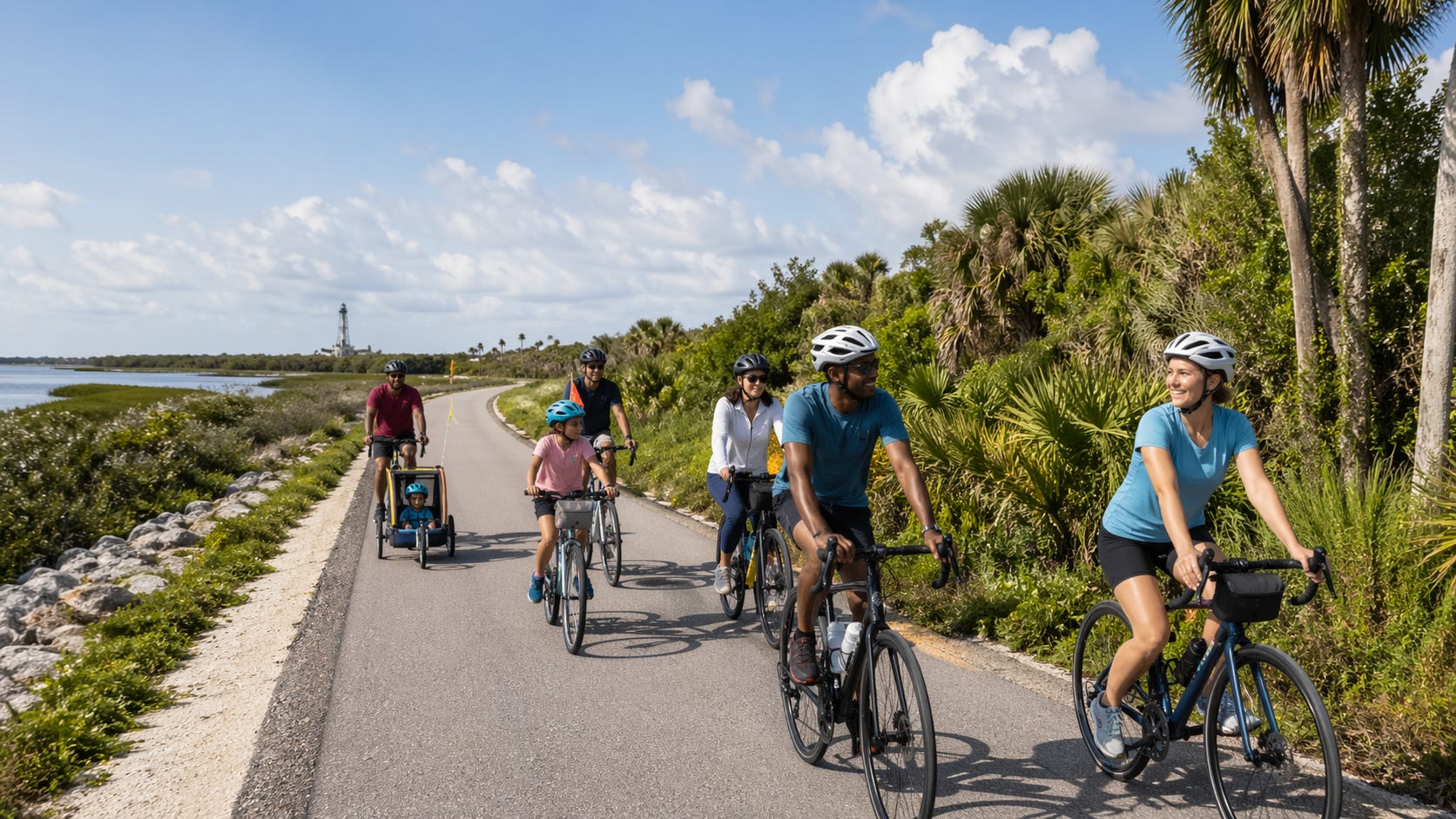
Safer bicycling statewide starts with both better places to ride and better knowledge of how to ride safely.
A safer Florida is not automatic
A safer Florida does not happen by accident.
A protected bike lane is only safer when riders understand visibility, positioning, and intersection conflict points. A shared-use trail works better when people know how to pass, yield, manage speed, and reduce conflict with others.
Even the best public investment can fall short if people do not know how to use it safely.
That is why education matters.
Safer bicycling is not just built. It is taught.
Why this matters right now
Florida is entering a major moment for bicycling.
New trail construction is moving forward across the state. More communities are thinking seriously about connected networks, safer facilities, and better access. FBA’s own strategic direction points toward safer, more comfortable, and more accessible bicycling statewide through advocacy, infrastructure, education, and partnerships.
That is exciting.
But growth changes the challenge.
As more families, new riders, older adults, and e-bike riders enter the system, education becomes even more important. More people riding should mean more opportunity, not more confusion.
Infrastructure creates opportunity. Education helps people use that opportunity safely.
The gap is not just pavement. It is knowledge.
Many preventable crashes begin with misunderstanding.
Some riders never learned the basics of predictable riding.
Some motorists do not understand that bicycles are vehicles under Florida law.
Some parents are buying electric rides for children without understanding the legal and safety differences between a lawful e-bike and a higher-powered electric motorcycle. FBA’s education and policy materials repeatedly stress that this public understanding gap is one of the biggest safety issues in front of us.
Education closes that gap.
It gives people practical knowledge they can use immediately:
How to ride predictably
How to scan and signal
How to pass safely
How to handle intersections
How to slow down around pedestrians
How to make better decisions before a close call becomes a crash
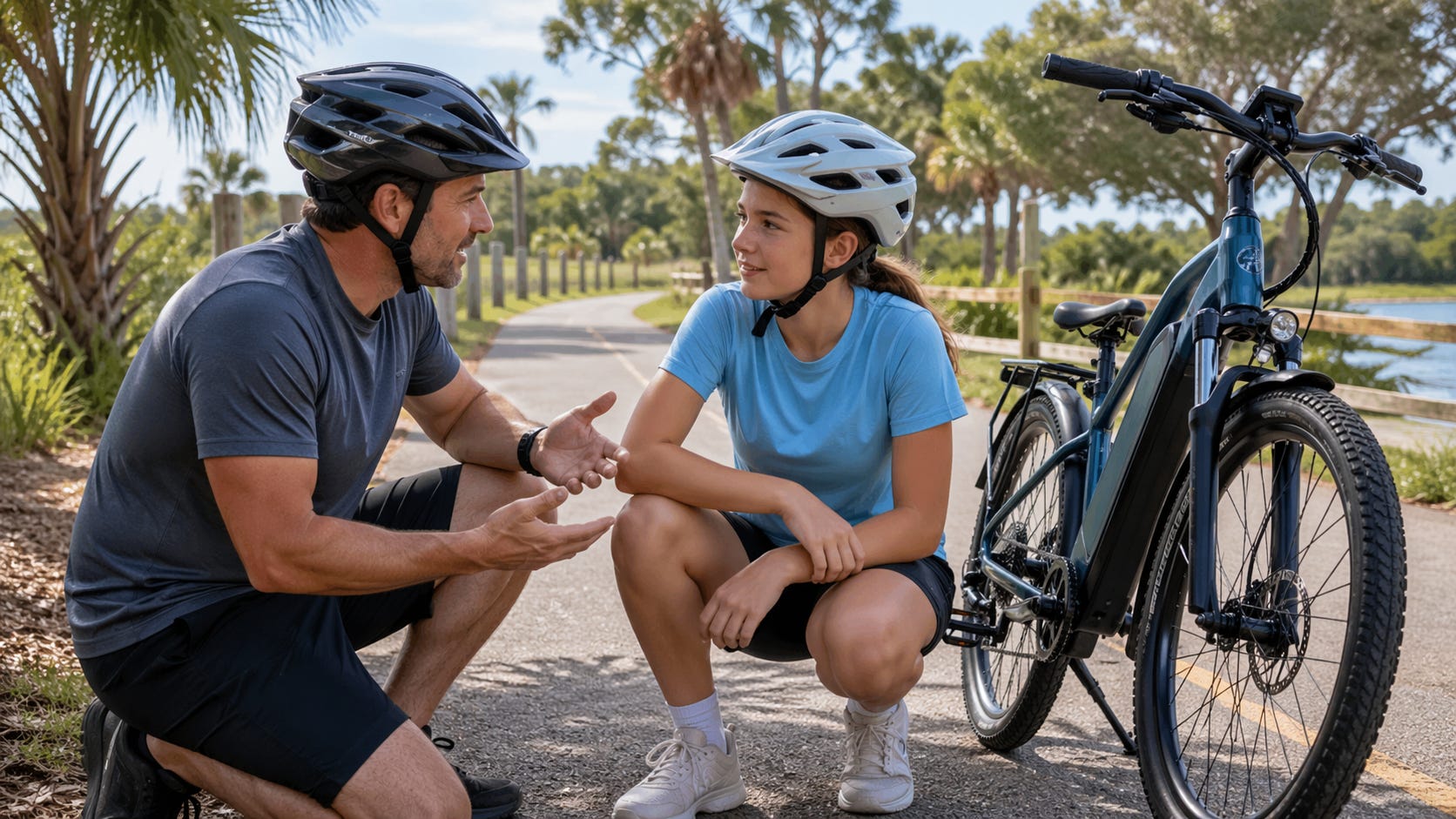
Education works best when it is practical, visible, and rooted in real riding situations.
The goal is not just more riders
Of course we want more people riding.
More riders can mean healthier communities, stronger local economies, less traffic pressure, and more support for safer infrastructure.
But the goal is not just more riders.
The goal is safer riders.
That means riders who understand trail etiquette.
Riders who know how to communicate with others.
Parents who understand the responsibilities that come with faster, heavier bicycles.
Young riders who build safe habits early.
FBA’s broader planning documents frame this clearly: education is meant to improve rider behavior and community safety, not just distribute information.
E-bikes make education even more urgent
Few topics show the need for education more clearly than e-bikes.
Lawful e-bikes can expand access, help people ride farther, replace short car trips, and make bicycling more practical for transportation and recreation. FBA supports that role. At the same time, FBA has drawn a clear distinction between lawful e-bikes and higher-power electric motorcycles that are often mislabeled as bikes, especially in youth use cases.
That distinction matters.
Because more power without more skill is not a safety strategy.
Parents need practical guidance. Young riders need training. Communities need clearer public understanding. FBA’s e-bike materials emphasize that bicycles are vehicles under Florida law, that helmets remain essential, and that education-first youth safety is the right approach.
A helmet matters. Training matters. Judgment matters.
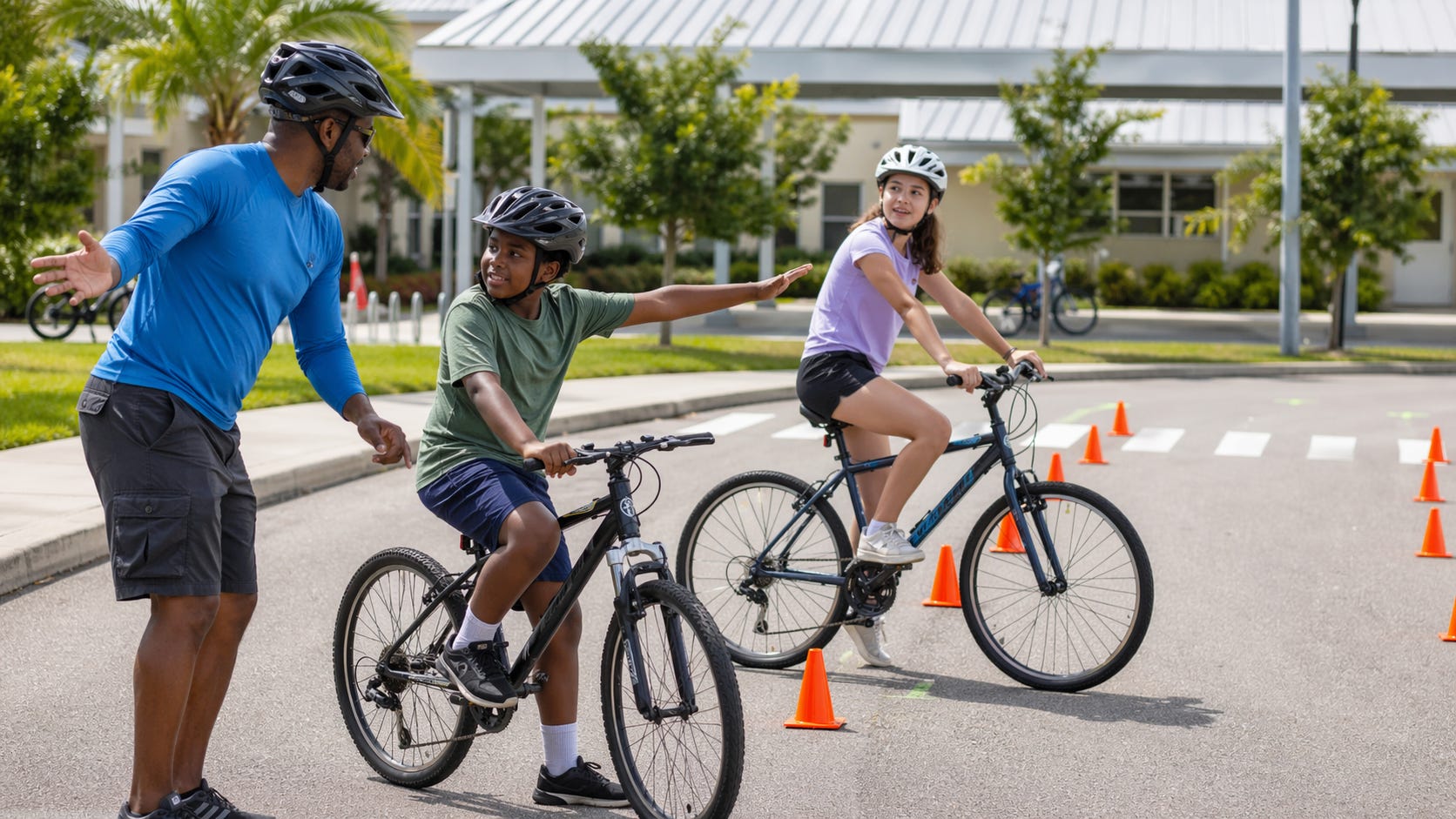
Safer decisions start before the ride begins.
This is where FBA can lead
Education is one of the clearest ways FBA can lead right now.
Your materials already point toward programs and tools that fit this role:
Bicycle Safety Quiz
Safer Students Program
bike rodeos
instructor support
practical guidance for parents and riders
short-form, easy-to-understand communications that help people act quickly and safely
That is what education leadership looks like.
Not abstract.
Not overly technical.
Not buried in long explanations.
Useful. Visible. Repeatable. Practical.
What this looks like in the real world
It can look like:
A parent understanding what to check before buying an e-bike
A student learning safe starts, stops, scanning, and signaling
A rider understanding why riding predictably matters
A school or community partner using FBA resources to teach safer habits
A member sharing a trusted safety resource instead of waiting for a crash to start the conversation
This matches the broader communication direction in your planning files: clear, practical, action-oriented messaging that shows value fast and builds trust through relevance.
The bigger picture
Florida needs advocacy.
Florida needs better infrastructure.
Florida needs stronger partnerships.
And Florida also needs education that people can actually use.
Because safer bicycling is not only a policy challenge or a design challenge.
It is also a behavior challenge.
And behavior can change.
That is why this pillar matters so much.
Skills plus behavior change save lives.
Take the next step
Support FBA’s work to expand practical bicycle education across Florida.
Explore our resources, share them with others, and help us build safer bicycling statewide.
Important FBA Links
Florida Bicycle Association
floridabicycle.org
Support FBA
floridabicycle.org/support
Bicycle Safety Quiz
floridabicycle.org/bicycle-safety-quiz
Parents E-Bike Gift Guide
floridabicycle.org/news/the-parents-e-bike-gift-guide